
Lateral Spine Flexion, Motor Compensation and Sagittal Plane Exercises
- May 19
- 3 min read
One of the common compensations you see when people are lifting barbells to significant fatigue is lateral spine flexion, rotation and a lean towards one side. It is very normal when attempting rep maxes or pursuing the almighty 1RM to see this movement occur. The question is why? Why does it happen and why does the body move in this fashion?
When put to the test and when working on creating more strength from your body your brain gets very invested in recruiting the strongest and most capable muscles for the job. This means it is going to rely on the biggest muscles and the muscles that are the most capable of creating force. Fundamentally its an efficiency game. How much neural drive do you think would be necessary to increase the force production capacity of the standing press via the calf muscles? This is not to say that the calf muscles are not useful in pressing. However, your brain is acutely aware that if it chooses to attempt to increase the force output of your torso by squeezing every last bit of neural drive from the lower leg then it's going to be attempting to do more with less potential support. So instead what it does is rely on the stronger/more efficient muscles/tissues to get the job done.
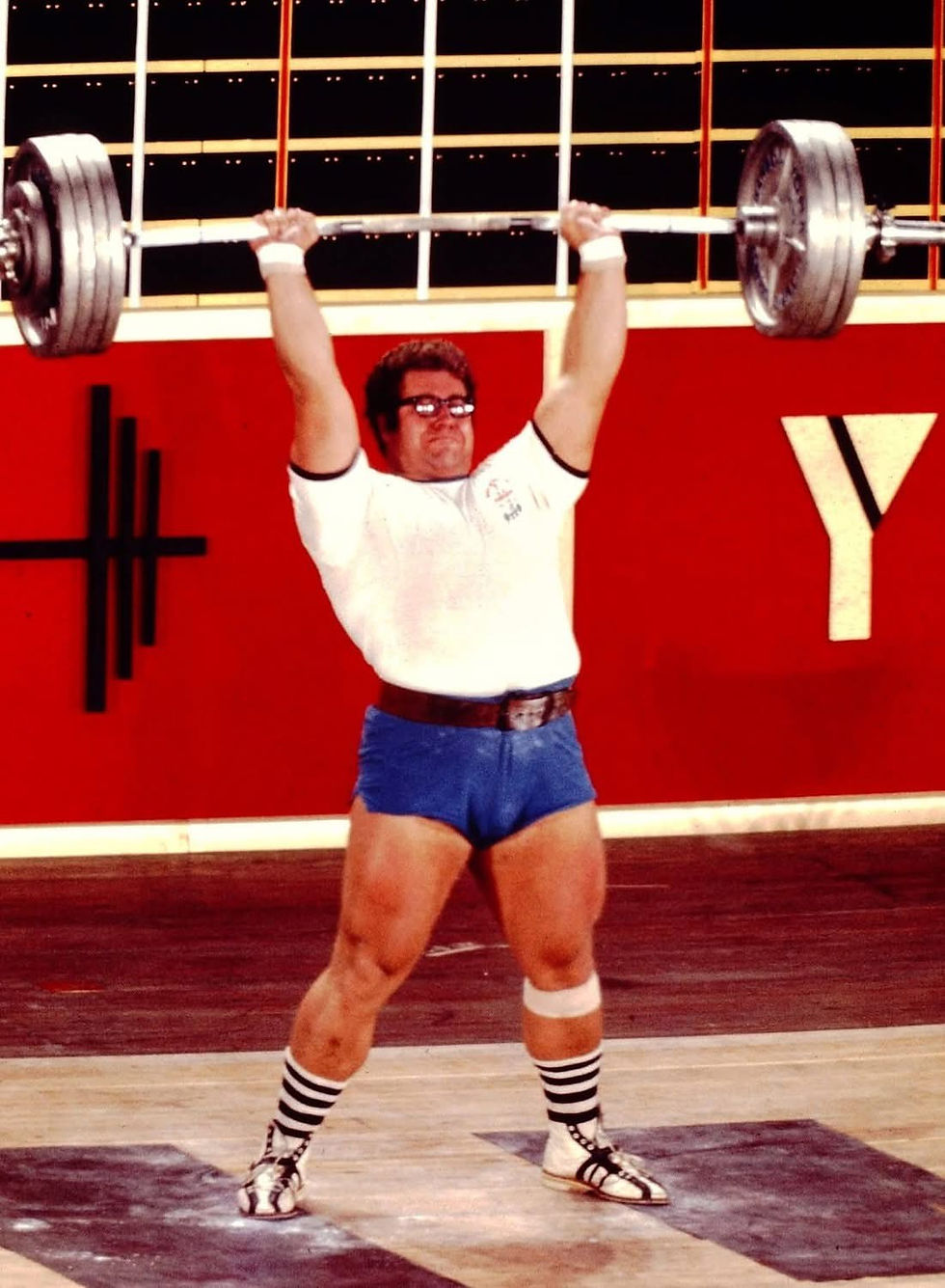


So when there is a backwards lean or a shift to one side the reason why you see this is because there is greater capacity on that side. A traditional front side of the neck overhead press compensation pattern is often seen by leaning back away from the bar because the lumbar fascia is more capable of stabilizing the press than the abdominal muscles in the front. So what you see even in the strongest athletes ever to press overhead is a backwards lean. To be clear this is the winning position or in other words the successful position at an elite sporting level. This is not a movement that is not successful. So this in other words is what it looks like to create maximum force in a dynamic force transmission system. It moves in order to accomodate the stressor and responds to stress in ways that seem less than beneficial but fundamentally it gets the job done.
Where we can get off on the wrong foot is just letting this pattern be the pattern and instead of shoring up the foundation just let the body continue to be pushed around over and over and over again. Instead of that, attempts should be made in training to minimize the lean back and to the side. Not only to minimize injury but to improve performance. The less of a lean back there is and the stronger the abdomen is the less lumbar stress there will be. Not only will this keep your facet joints happier it will also keep your torso from rotating and flaring the ribs.

Assistance exercises need to be employed in order to remedy these shifts in position. This can be anything from extra work on the abdomen to extra lat work on the side that is being shifted away from. When lateral flexion and rotation is occuring you no longer have just a sagittal plane problem to solve. Even extra triceps work or deltoid work can be useful to minimize shifting and/or increasing amounts of compression on one side of the body. This occurs in all sagittal barbell exercises whether it is a squat, deadlift, bench press, row or overhead press. This is such a common phenomenon in barbell lifting practice that the Soviet Olympic lifters spent over half of their pressing time doing behind the neck presses instead of front of the neck presses. This shift in training stress helped to spare the lower backs of many stronger athletes and prevent future potential injuries.
A well prepared athlete will look more symmetrical in the best moments of competition but the reality is that making lifts sometimes requires wild looking movements that are not included in preparation. These moments allow us a glimpse into the capacity for resiliency that the soft tissues and more rigid structures of the body possess because of the training process.

With progressively overloaded movements what is important to consider is that the whole body is under stress from toes to nose. Any imbalance from right to left or from front to back or top to bottom is a potential weakness that should be minimized as much as possible through the training process. Without this attention to detail the reality will soon be that more loading in an unbalanced manner will create inequitable compression on the structures of the spine, hips, shoulders and elbows. Which at the very least will not assist progression and at worst will leave the door open for potential injury.



Comments