
Pull Ups, Pulldowns and The Lat Muscles
Updated: May 17
Developing the lat muscles is highly valuable for sports performance, physique enhancement and also for preventing spine injuries. The difficulty of the development of the lats is that it involves the shoulder which is a joint that has very little in terms of an actual structure. Most often when people try to develop the lats they end up developing some shoulder dysfunction because they do not work on all the muscles around the scapula. If we think of how to make just the lats bigger/ stronger and we don't think about how to develop the rest of the shoulder muscles eventually what happens is that the shoulder develops problems.
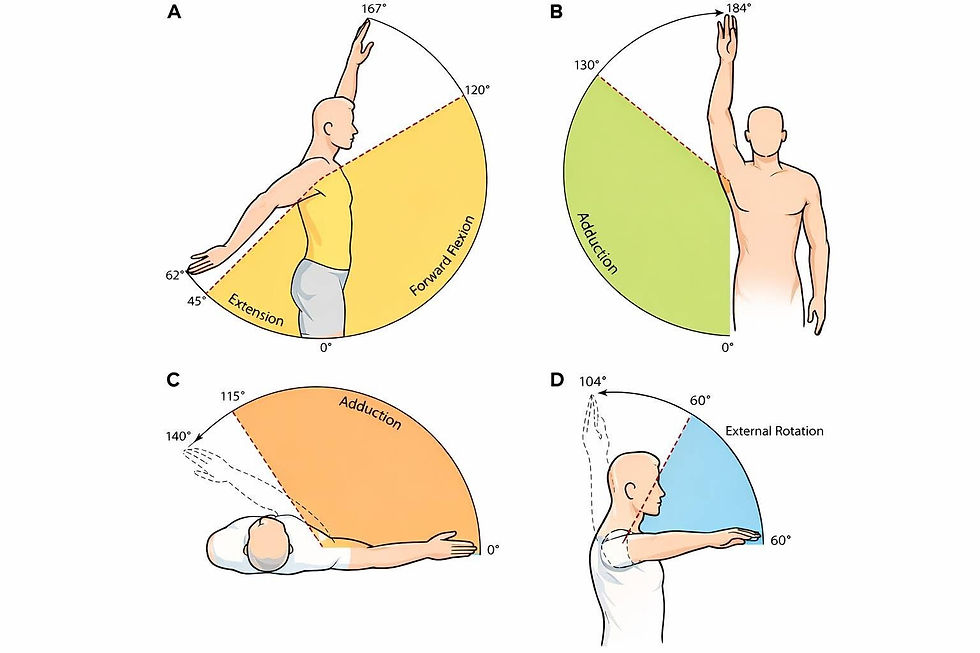
There are a lot of different ways to build the lats. Some strategies are better than others but the reality is that stronger/bigger lats are a really good thing to have!
Why?
Because they are the biggest upper back muscles and protect the smaller back muscles from injury! That would be the first reason. The second reason would be that it assist in protecting the spine, the hips and the neck from excessive amounts of flexion in hinge patterning. The third reason would be that if you want to be able to pull yourself up while dangling off a cliff you are going to need them to move yourself out of danger.
But what are we talking about? Lats? Latissimus Dorsi right?
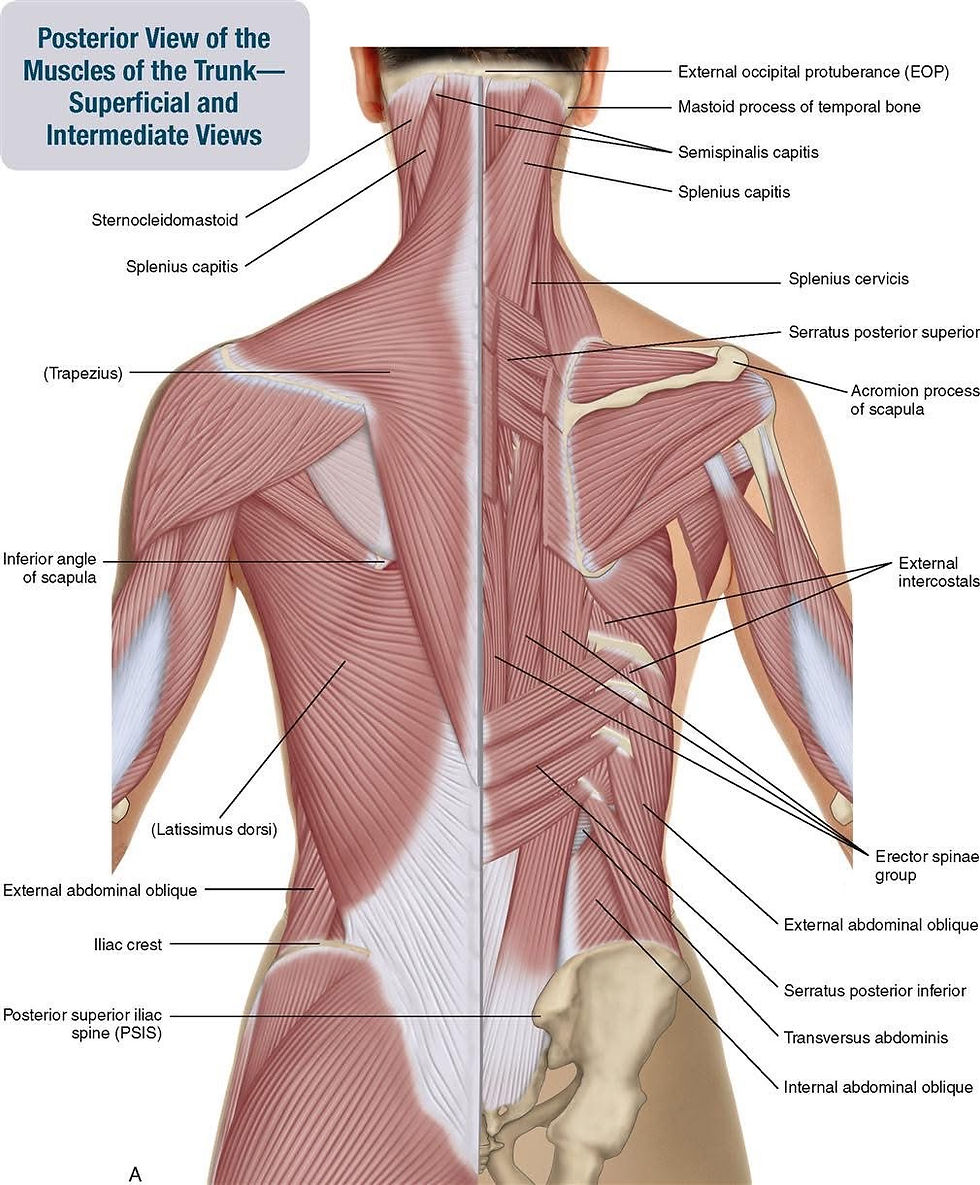
The lats are big muscles that connect the upper body to the lower body. They attach up high on your humerus and attach way down low on your sacrum. This is important to understand because the lats help facilitate a lot of different functions for your body. In a deadlift they facilitate a function of isometric stabilization for a lot of the trunk as the bar is lifted off the floor. Without these muscles a lot of other structures would be put under extreme amounts of stress and injury would most likely occur. Lats are also the prime movers in humeral extension as well as powerful internal rotators of the humerus. Another function that most people don't consider is lateral flexion of the trunk. Often a lat imbalance can cause problems in lower body movements because of this dynamic level of imbalanced tension in the body.

When we look at movements that are going to strengthen the lat muscles there are a wide variety of options. Pull ups, pulldowns, pullovers as well as deadlifts and farmers carries all help to develop the lats. The challenge is for the person to decide which are the best exercises for their point on a developmental continuum.
Pull ups initially come up as a very familiar exercise but when you consider that the pull up has a bodyweight poundage entry point it becomes important to think about how realistic that is. If you weigh 175lbs and you want to do strength work for your lats with pull ups you better have stronger lats already. If you were to divide the loading on each lat per rep per pull up what you would think of is that each lat would have to load share 87.5lbs PER REP! Now most people when they start the process of building their lats are not starting at this place. So cable lat pulldowns, cobra pulldowns, sideyling pulldowns with bands and other exercises are much more important to consider as opposed to the heavy load of the bodyweight pull up. Solely for the reason that the cable stack is going to start much lighter than the bodyweight of every person who uses one.
So the consideration of the exercise selection really matters here. Also, the other thing to consider would be straight arm as opposed to bent arm pulldowns? Taking the elbow and biceps out of the exercise as secondary movers would be a good way to find out how strong your lats actually are from side to side as well as in different body positions. Cobra Pulldowns and sidelying pulldowns would also be a good way to ascertain what capacity each lat has relative to its counterpart. An important distinction long term in pursuing muscular development is not only how big/strong it is but also how symmetrical the development is with other muscles in the body. Having big lats and small rhomboids, low/mid traps and under developed rotators as well as serratus muscles is a problematic blend for shoulder health.
Let's get back to the pull ups because that is where there is a significant amount of curiosity in training. There are dead hang pull ups to do, scapular pull ups, hollow body pull ups, tactical pull ups and every other variation under the sun that you can imagine with hand position as well as rotation of the humerus and ulna. What becomes most important is does the specific pull up variation meet you where your ability level is. If you do not have the strength to do pull ups already you need to work on hanging from a bar that is beyond your overhead reach, or farmers carries as well as double overhand deadlifts in order to get the lats to learn how to accept increasing amounts of stress. This process is one of muscular endurance and it is not the time for maximal effort approaches. Save that approach for when you have the ability to do pull ups already and are very strong with them.
If you can do a single pull up but not doubles or triples your next objective is to pursue as many singles as you can reasonably handle during the week. One particularly successful method is to hang a pull up bar in your living space and every time you pass it do a single pull up. As you go throughout your week you will most likely pile up 50 or more pull ups. As you perform more pull ups you will get access to 2's......3's.......4's.....etc. as your body adapts to the increased volume and tonnage of the pull up.
You can also do loaded pull ups(pull ups heavier than bodyweight) when you have the strength to do so. If you weigh 175lbs and add 25lbs to a dip belt and attach it to your waist you are now doing 200lb pull ups. Now this may pull you back to the singles progression but every pull up you do now has extra load on it and it has the potential to boost your bodyweight pull up volume higher as you adapt to it. Eventually doubles and triples at 200lbs piles up and your ability to perform more bodyweight work also increases. If you want to think about it from a tonnage perspective sets of 3 at 175 is a 525lb stress. Sets of 3 at 200lbs is a 600lb stress. So the more adapted you can get to increased loaded pull ups the "lighter" your bodyweight will feel and the more reps per set you will be able to do with just your bodyweight.
Pull ups are also great core/trunk work and if you learn how to hold a hollow body position you then learn how to improve your overhead press significantly. The more of a tight middle section you can create the better of a muscular buffer you can have for your lower back in the overhead pressing exercises. The scapular pull up is also very useful for developing the excellent control of the muscles that move the shoulder blade but it is not a beginner variation. It's better to start with bands from a hanging bar or a light cable stack that allows lighter loading than the bw entrypoint variations in order to avoid high levels of compensatory stress going into the upper trap(s).
What matters most when we are looking at pull ups specifically(and every other bilateral exercise) is how to avoid compensatory recruitment of the many muscles of the shoulder and torso. If we start too soon with bodyweight loads only.......and have a lat imbalance or a rhomboid imbalance or a trap imbalance one of the big problems is that there will be issues continuing progression without significant levels of hypertonicity of those compensatory tissues. It's very common to see people who are gung ho to learn how to do pull ups start with "negatives" or "flexed arm hangs" with no muscular symmetry to begin with. Adding these exercises at this point is like pouring napalm on a gas fire. More stress on top of lack of symmetrical capacity creates joint dysfunction. So care must be given in order to create as balanced and symmetrical a progression for the body as possible. Otherwise we risk pain and injury for no good reason.
Pullovers are also very useful exercises for stretching the lats and opening up the ribcage. It is a great exercise to slowly progressively overload the lats in a stretched position. Javelin throwers use them as a preparatory exercise in the weight room and do so quite ballistically. This of course is an advanced variation and care should be taken when loading the shoulder in flexion in such a dynamic way. If there are functional shoulder ROM limitations and pain on board with full flexion it is important to consider that there may be muscle imbalances and length tension discrepancies already in the development of other muscles of the shoulder. So the pullover can be of assistance but you need to pursue it very carefully in cases of shoulder dysfunction.
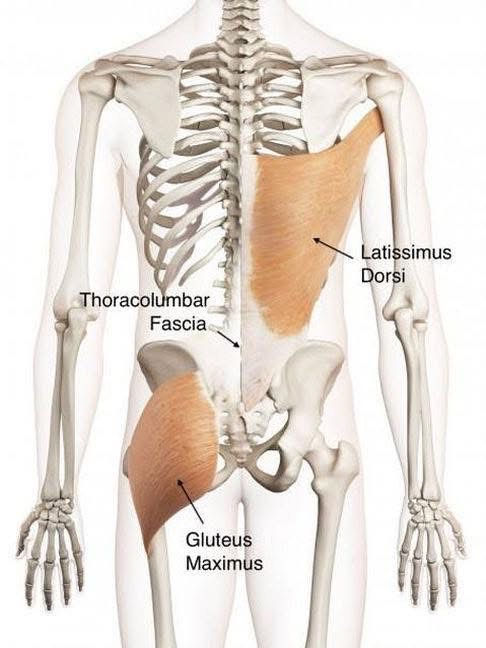
Last but not least it's important to realize the lats sling together with with glutes and pelvis. The lats and glutes assist in the function of the gait from the posterior side of the body. If you have a weaker glute and a stronger lat consider what that could mean and how it would impact the functional dynamics of the body. Also, if you have a stronger glute and a weaker lat consider what that could mean and how it would impact the functional dynamics of the body. The reality that the body does not function in any isolation capacity is important to embrace here. The ability to squat with a barbell on your back is just as dependent on lat function as it is glute/quadriceps function. If there are dynamic imbalances between the torso and the pelvis it would be important to consider what the linkage looks like between the two in order to continue a sound loading progression.
When considering all of these factors its critical to keep in mind that training is supposed to be prophylactic in nature. You have to work within the capacity you currently have in order to pursue greater capacity. Pull ups are great and I encourage anyone and everyone to pursue learning how to do them. However, it's really important to choose an entrypoint that keeps you moving forward in progression as opposed to drifting your body closer and closer to injury or significant muscle imbalance. Consider that cable or banded lat pulldowns, db pullovers, band assisted hangs, deadlifts, farmers carries and other exercises may be the better entrypoints as opposed to looking at the specific stressor of the bodyweight pull up. The entrypoint needs to give you at least 3 months or more of progression time in order to make progress without leaning aggressively into high levels of musculoskeletal dysfunction.


Comments